Capped Upside: A 2026 Field Audit of Odds-Boost Tokens at Six US Sportsbooks
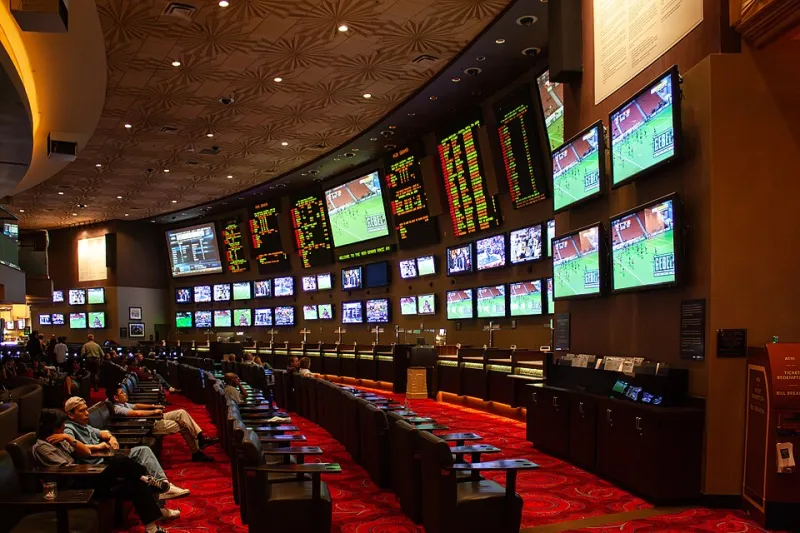
Photo: Chad Davis, CC BY 2.0, via Wikimedia Commons
Odds-boost tokens are marketed as simple percentage increases: a 50% profit boost, a 100% parlay boost, a 30% same-game special. In practice, each token is a coupon with a ceiling, a minimum qualifying price, a market filter, and an expiration clock. As of 27 November 2026, PlatinoBet reviewed the publicly posted terms of boost promotions at six licensed US sportsbooks. To keep the comparison about contract language rather than brand marketing, the operators are labeled A through F.
The central finding is consistent: the headline percentage is usually the least important number on the page. The maximum stake, minimum odds, eligible markets, and extra-winnings cap determine whether a boost is worth using at all.
The Four Numbers That Define a Boost Token
Most US boost promotions disclose the same core terms, but they combine them in ways that can shrink value sharply. A bettor should isolate four figures before placing a boosted wager.
- Maximum stake: the largest amount to which the boost applies.
- Minimum odds: the shortest price at which the token can be used.
- Eligible markets: the specific bet types, leagues, and line types that qualify.
- Payout cap: the maximum extra winnings the boost can generate, separate from the stake.
Two secondary terms matter almost as much: the expiration window and the void or stat-correction rule. A token that vanishes after 24 hours, or is removed when a settlement is corrected, is worth less than one with a longer window and clearer reinstatement language.
The Ledger: Six Operators, Six Fine-Print Profiles
The table below summarizes representative boost terms from the six reviewed operators. The final two columns convert the terms into dollars at the minimum qualifying odds and at the maximum practical value after the cap is applied.
| Operator | Headline boost | Max stake | Min odds | Eligible markets | Expiration | Extra-winnings cap | Extra at minimum qualifier | Maximum after cap |
|---|---|---|---|---|---|---|---|---|
| A | 50% profit boost | $25 | -200 | Spreads and totals, main lines | 48 hours | $25 | $6.25 | $25 |
| B | 100% profit boost | $10 | +100 | Moneyline only | 7 days | $50 | $10 | $50 |
| C | 30% profit boost | $50 | -150 | Pregame main markets | 24 hours | $20 | $10 | $20 |
| D | 25% profit boost | $100 | -110 | Select leagues and main markets | 72 hours | $30 | $22.73 | $30 |
| E | 20% profit boost | $200 | -300 | Main markets only | 14 days | $40 | $13.33 | $40 |
| F | 50% parlay boost | $20 | +150 | Parlay only, no alt lines | 7 days | $30 | $15 | $30 |
The table makes the first point of the audit clear: a larger percentage does not automatically produce a larger dollar boost. Operator B advertises 100%, but the $10 maximum stake limits the extra at the minimum qualifier to $10. Operator D advertises only 25%, yet a $100 maximum stake at -110 produces $22.73 in extra value before the cap. The headline and the ledger tell different stories.
Where the Shrink Happens
The second point is that caps and eligibility filters often bind before the advertised percentage can work at full strength. Operator C offers a 30% boost on up to $50, but the $20 extra-winnings cap is reached at moderate odds. At the minimum qualifier of -150, the token produces about $10 in extra value; at +200, the same token would produce $30 before the cap, but the cap reduces it to $20. The bettor is not receiving 30% of the full profit at every price point.
Operator E illustrates the opposite risk. The maximum stake is generous at $200, but the minimum odds of -300 mean the token begins with a small profit base. At -300, a 20% boost on $200 adds only about $13.33. The token becomes more valuable at longer odds, but longer odds also increase variance. A boost that requires a +200 underdog to reach its ceiling is not equivalent to a boost that can be used on a -110 favorite.
Operator F adds a parlay-only restriction. The 50% boost applies to a $20 maximum stake and excludes alternate lines. If one leg voids, the boost typically recalculates or disappears, which means the token's real value depends on the survival of every leg. In a same-game parlay or a short parlay, that condition can matter more than the percentage itself.
The Void Clause Is Part of the Price
US sportsbooks commonly attach settlement language to boost tokens. The reviewed terms included three recurring clauses: a token may be voided if a wager is settled by stat correction after a stated window; a token may not be reinstated if a leg is voided; and a token may be removed if the bet is cashed out. Those clauses are not uniform. Some operators state that a corrected settlement will be re-graded and the token reinstated, while others treat the token as spent once the original wager is settled.
For practical purposes, the void clause changes the expected value of the token. A boost used on a market with a high likelihood of stat correction, such as a player prop or a market with subjective grading, carries more administrative risk than a boost used on a mainstream spread or moneyline. Bettors should read the settlement section before assuming the boost will survive a correction.
A Practical Checklist for US Bettors in 2026
- Convert the percentage into dollars. Multiply the maximum stake by the profit factor at the minimum odds, then apply the boost percentage. Compare that result with the cap.
- Pair the maximum stake with the minimum odds. A large maximum stake is less useful if the minimum odds are very short, and a high minimum odds requirement is less useful if the maximum stake is small.
- Confirm market eligibility. Check whether the token applies to main lines only, excludes alternate lines, or requires a parlay.
- Read the void and stat-correction rule. Look for language on reinstatement, cash-out, and voided legs.
- Compare the boosted price with the best available price. A boost on a poor base price can still be worse than a standard wager at a competing US sportsbook.
- Calendar the expiration. A seven-day token and a 24-hour token are different products, even when the percentage is identical.
Bottom Line
Odds-boost tokens remain a useful promotional tool, but they are not flat percentage increases. They are capped coupons with eligibility filters and settlement conditions. The six-operator ledger shows that the real value of a boost can range from a few dollars to the cap, depending on stake limits, minimum odds, and the market selected. For US bettors in 2026, the disciplined approach is to price the token before using it, not after the bet is settled.